
We have more ways to communicate than ever before. Yet finding people with whom we can genuinely think, experiment, organise and create remains surprisingly difficult.
The Forum is built around this understanding of collective human capacity. Its purpose is to make valuable encounters easier, give relationships room to develop and help knowledge, creativity and initiative move beyond the boundaries of individual professions.
Not networking as self-promotion. Networking as the development of shared capability.
The Institute Forum is a private meeting place for the human work that happens between disciplines, professions, perspectives and people. It brings together researchers, artists, educators, technologists, designers, cultural workers, organisers and other curious minds who recognise that their most interesting questions cannot be answered within a single field.
Here, a conversation can become a collaboration. A shared concern can become a project. An unexpected introduction can change the direction of someone’s work. And an idea that is not yet ready for the world can find the people who help it become something.
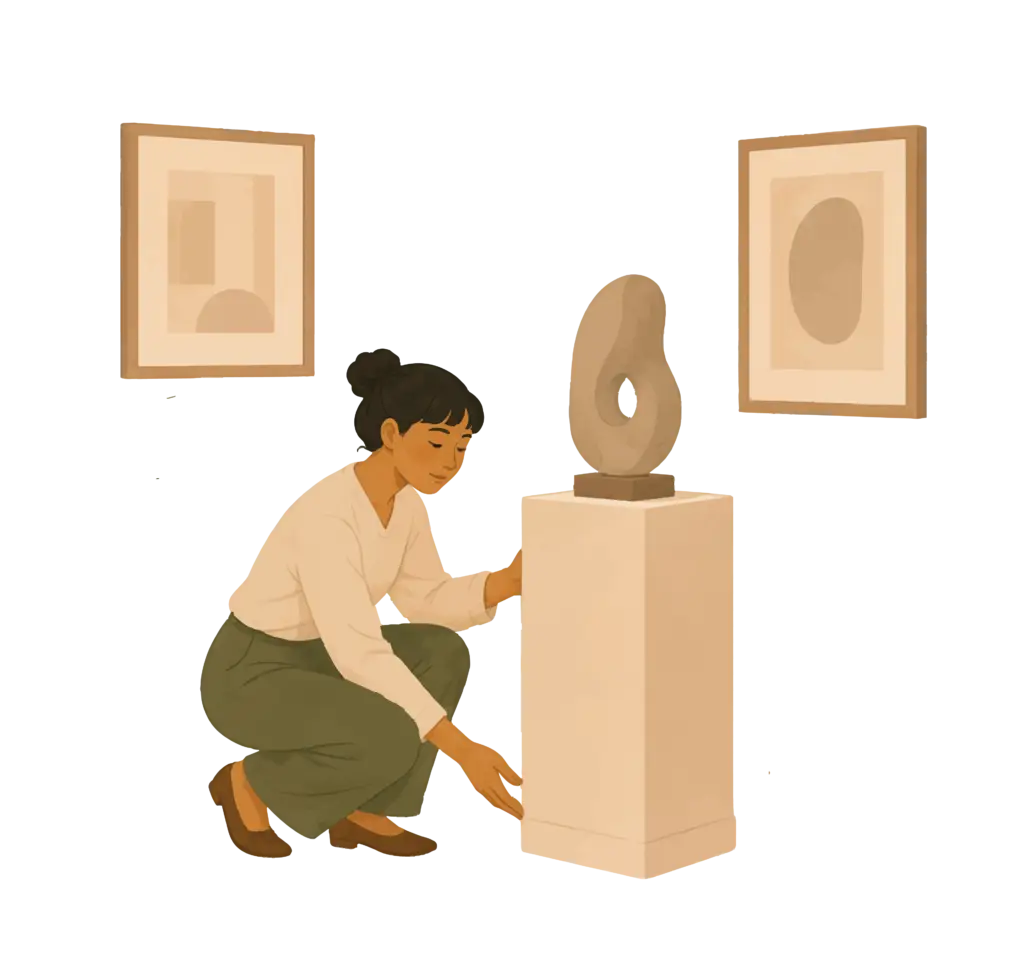
We tend to think of human capability as something individuals possess: knowledge, creativity, judgment, imagination or expertise. But much of what makes us capable exists between us, in the relationships that allow knowledge to travel, perspectives to meet, trust to develop and people to act together.
One person understands the research. Another recognises its implications. Someone has the practical experience to challenge an assumption. Someone else knows how to translate the insight into a film, an intervention, a learning environment or a new way of working.
The value is not simply in the people themselves. It emerges through the connections between them.
Social media has made publishing effortless and visibility measurable. It has not necessarily made thoughtful exchange, sustained collaboration or meaningful human connection any easier.
A feed asks what you have to show. A working relationship begins with what you are trying to understand, make or change.
The Forum is organised around people, questions and shared interests rather than the pursuit of attention. There is no requirement to arrive with a finished position, a polished project or something worth announcing. You can come with uncertainty, offer a perspective, contribute knowledge, ask for help or simply recognise that someone else’s question connects to your own.
The distinction matters. Some ideas need discussion before exposure. Some collaborations need continuity before commitment. Some relationships become valuable through repeated, modest exchanges rather than impressive introductions.
The Forum gives those processes somewhere to happen.
Human collaboration takes many forms. A question worth opening to an entire network requires different conditions from a research group developing a proposal, a workshop continuing its conversation or a small team testing an idea that is not yet ready to be shared.
Members can create open rooms for questions, resources and conversations others can discover and join; private rooms for working groups and collaborations with selected participants; and secret rooms for invited groups that need discretion, trust or a more carefully bounded conversation.
These are not simply discussion spaces. They are meeting surfaces for different stages of thinking and making. A room can hold research materials, questions, contributions, emerging plans and the people involved. It can connect a physical gathering to subsequent work or give an entirely new collaboration a place to begin.
The structure is deliberately flexible because useful human encounters rarely follow a single prescribed format.
Find your people. Create a room. Give an idea somewhere to grow.
A researcher may need an artist to reveal something their methodology cannot express. A filmmaker may need the historical knowledge of an archivist. An educator may recognise the learning potential in a designer’s experiment. A technologist may need the perspective of a community organiser to understand what a system does to people once it leaves the laboratory.
These encounters are not peripheral to serious work. They often change the questions being asked, the methods available and the possibilities anyone can see.
The Forum welcomes the intersection of intellectual inquiry, creative practice, cultural production, civic engagement and practical experimentation. It creates room for both the social and the creative dimensions of collaboration: the relationships through which people learn to work together, and the work that becomes possible because those relationships exist.
Not every connection needs to produce an outcome. Sometimes the most valuable thing is discovering another way to understand the problem. Sometimes it is finding someone who shares your curiosity. Sometimes it becomes something neither person could have imagined at the beginning.
We are interested in all three.
Conferences, workshops, exhibitions and public conversations bring people into contact, often across professional and geographical boundaries. But the moment when those relationships become genuinely interesting frequently arrives just as everyone is preparing to leave.
The Forum gives those encounters continuity.
Participants can reconnect, share materials, develop questions, organise subsequent conversations and create their own rooms for further work. An encounter that begins in a physical space can develop into an ongoing exchange without becoming another mailing list, disappearing into scattered messages or depending entirely on the person who organised the original event.
This is especially important for the Institute’s work across research, culture, education and technological change. Many of the relationships worth developing will begin through a specific project or gathering, but their potential should not end with its programme.
A meeting can be an event. It can also be the beginning of a network.
AI is changing how much a person can research, write, analyse, design and produce independently. That expansion of individual capability is remarkable. But it does not remove the need for human relationships. In many contexts, it makes the quality of those relationships more important.
A powerful tool can produce an answer. It cannot establish the mutual responsibility between people who must decide what to do with it. It can generate possibilities without bringing together the lived experience, trust, commitments and competing perspectives needed to pursue them well.
Some of the most important capacities of the coming decades may therefore be profoundly relational: recognising complementary knowledge, thinking across difference, building trust without requiring agreement, coordinating action and creating conditions in which others can contribute.
The Institute studies human capacities. The Forum provides a place to exercise some of them collectively.
It is an experiment in the social infrastructure that an increasingly technological society still needs, and perhaps needs more deliberately than before.
The Institute Forum is free and invitation-based. We are developing it gradually, with an emphasis on thoughtful participation, complementary perspectives and the possibility of meaningful exchange.
You do not need an impressive title, a large audience or a finished project. You might bring specialist knowledge, practical experience, an unusual perspective, a question worth pursuing, a creative skill or the willingness to help someone else think through a difficult problem.
Membership is currently subject to a waiting list. People already connected to existing members receive priority, but we welcome introductions from people whose interests and work connect with the Institute’s wider field.
Tell us a little about what occupies your thinking, what you are working on or what you would like to explore with others.
Technology can make us more productive individually. It can extend what we know, accelerate what we make and widen what we can attempt.
But a society’s capacity is not the sum of its individual outputs. It also depends on whether people can find one another, recognise what they have to offer, build relationships across difference and turn shared understanding into meaningful work.
That requires more than communication technology.
It requires places to meet, reasons to return and the freedom to discover what becomes possible together.
That is what we are building here.