Why Civilization Needs an Operating System for Inner Growth
A civilization learning to live with artificial intelligence will need more than technical readiness. It will need shared ways of developing attention, discernment, embodiment, agency, and responsibility under acceleration.
6 minutes
A civilization does not only run on laws, markets, schools, and machines. It runs on the inner capacities of the people moving through them.
The Hand Before The Answer
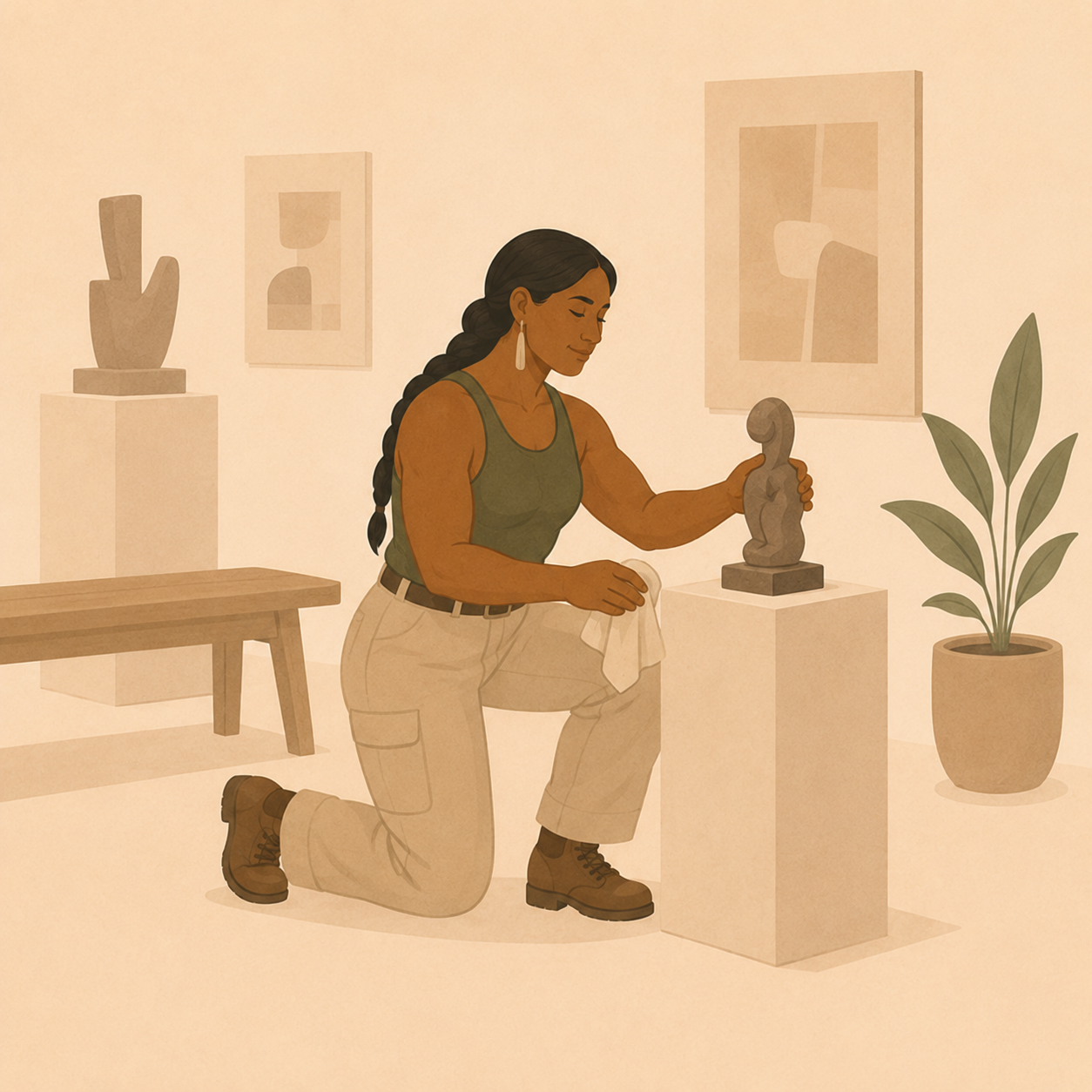
Watch the hand before the tool replies.
It hovers for a second above the keyboard, fingers slightly curled, the wrist lit by the pale rectangle of the screen. There is a question somewhere in the body, not yet clean enough to be typed. Messages wait. Another meeting is close enough to be felt in the shoulders. Then the prompt is entered. The machine answers. Relief arrives before discernment does.
This is not a failure of character. It is a new human scene.
People are beginning to live beside systems that can speak before thought has ripened, summarize before attention has settled, and recommend before desire has become honest. The tool is useful. The danger is the gradual loss of the inner friction through which judgment, authorship, and agency are formed.
The operating system metaphor begins here, in this ordinary moment. Not because human beings are computers. Not because culture can be programmed. Not because inner life should be optimized like software. The metaphor is useful only if it stays humble. It points to a missing coordinating layer: a shared way to organize the practices, ethics, and environments through which human beings remain capable inside technological acceleration.
A civilization does not only run on laws, markets, schools, and machines. It runs on the inner capacities of the people moving through them.
The Private Moment Is Not Private
The signs appear intimately.
A student can generate an essay but feels less sure how to stay with a difficult paragraph until thinking changes. A leader reads a synthetic briefing that sounds complete, then notices the body relaxing too quickly into borrowed confidence. A citizen scrolls through a public crisis and feels outrage, dread, belonging, suspicion, and exhaustion arrive faster than thought.
These moments look personal. They are also infrastructural.
Attention is not only a private virtue when entire economies compete to fragment it. Discernment is not only an individual skill when synthetic media can give falsehood the texture of fluency. Emotional regulation is not only self-command when public systems reward intensity, humiliation, and speed. Embodiment is not only a personal practice when more of work, learning, intimacy, and imagination is conducted through mediated surfaces.
The person at the screen is carrying a civilizational problem in their nervous system.
This is where older conversations about human development need translation. The Greeks understood that citizens had to be formed, not merely informed. Confucian traditions treated self-cultivation as social practice. The Stoics studied judgment under disturbance. Buddhist attention practices investigated trainable awareness. Contemporary neuroscience gives different language to the same broad intuition: what is practiced becomes more available. What is bypassed becomes less available.
The AI age intensifies the question. If machines handle recall, drafting, recommendation, simulation, and persuasion, then human development cannot remain decorative. It becomes the condition for sane use.
Related pieces such as “The Missing Technology of Human Development,” “What Is Inner Technology?,” and “The Next Great Infrastructure Is Human” carry the wider frame. The narrower claim here: scattered practices will not be enough for a coordinated age of machine intelligence.
Every Institution Has An Inner Curriculum
Move from the person to the institution and the pattern becomes clearer.
A school says it teaches knowledge, but it also teaches whether attention has dignity, whether difficulty can be endured, and whether authorship matters. A workplace says it produces goods or services, but it also trains speed, fear, trust, honesty, avoidance, courage, and exhaustion. A public agency says it administers policy, but it also teaches what forms of evidence count and whether responsibility can survive procedure.
No institution is neutral in the development of inner capacity. Each one has an unwritten curriculum.
The curriculum lives in meeting rhythm, incentive structure, leadership tone, evaluation method, response time, language, silence, and the emotional rules no one names. It is present in whether people can say “I don’t know” without losing standing, and whether a tool deepens work or offers a faster way to avoid what was already difficult.
AI strategy often begins with external readiness: data, infrastructure, policy, procurement, workforce training, security, compliance, competitiveness. All of this matters. But technical readiness without inner readiness produces a fragile kind of competence.
The next question for institutions is not only “What can this tool do?” It is “What will this tool train in us?”
That question changes the ethical center. It asks whether automation is returning time to judgment or converting every efficiency into more demand. It asks whether generated language is supporting thought or hiding its absence. It asks whether the institution is building human capacity or merely managing human strain.
Inner Interoperability
The genuinely new idea is inner interoperability.
In technical systems, interoperability means that different tools can communicate without becoming the same tool. Something similar is now needed across human development. Contemplative practice, somatic work, civic education, habit science, relational repair, moral philosophy, creative formation, leadership development, AI literacy, and digital wellbeing each hold part of the terrain. They come from different histories and ethics. Some are evidence-supported. Some are culturally rooted. Some become thin when translated too quickly into institutional language.
The task is not to flatten these practices into one doctrine. It is to create a responsible translation layer.
Inner interoperability would let a school connect attention training to authorship and AI literacy without pretending meditation is a productivity hack. It would let a government office connect discernment, public trust, and synthetic media without turning citizens into therapeutic subjects. It would let a workplace distinguish genuine capacity development from stress-management theater. It would let researchers mark what is known, inferred, and still open.
This is the operating system metaphor at its most careful. An operating layer does not replace the applications. It helps them relate. It holds permissions. It manages conflicts.
For inner growth, that layer would hold capacity maps, practice architectures, ethical boundaries, evidence standards, cultural humility, and institutional translation. It would protect against two failures: reducing inner life to metrics, and leaving inner development so private that institutions cannot take responsibility for the conditions they create.
What The Metaphor Must Not Do
The metaphor has risks.
It can make maturity sound programmable. It can invite fantasies of centralized design. It can turn living capacities into managerial categories. It can give institutions language for entering the inner life without enough consent, care, or restraint.
So the metaphor must be bounded.
An operating system for inner growth is not a platform for managing people. It is not a belief system, a universal method, therapy by another name, or a way for organizations to place unhealthy environments onto more resilient individuals.
Used well, it is a civic metaphor for shared developmental infrastructure. It asks what capacities the age requires, what practices develop them, what environments protect them, what evidence supports them, and what powers should be forbidden from using inner-growth language to extract, surveil, manipulate, or pacify.
The evidence is strongest for the claim that attention, emotion, behavior, learning, and perception are shaped through repeated practice and environment. There is also growing evidence that digital systems influence attention, mood, habit, and decision-making. The synthesis is that AI will amplify these pressures by making mediation more intelligent, persuasive, and ambient. The open question is how societies can build human capacity at scale without violating the dignity, plurality, and privacy of inner life.
That open question should stay open. Premature certainty would be part of the danger.
Implications
If civilization needs an operating system for inner growth, the implication is not that one institution should build a master framework and ask everyone else to adopt it.
The implication is that AI readiness must expand.
Education will need to protect the effort through which attention, memory, authorship, and discernment are developed. Policy will need to treat attention integrity, agency, and civic discernment as public-interest concerns. Technology design will need to ask whether systems make users more capable over time or more dependent on invisible assistance. Workplaces will need to examine the inner curriculum of speed, incentives, exhaustion, and trust. Research will need better ways to distinguish evidence, synthesis, cultural wisdom, and speculation.
This also changes the meaning of human-centered technology. Human-centered cannot mean pleasant tools with weakened human capacities underneath. It has to mean that design, governance, education, and culture are evaluated by what they train in the human being.
The pause before the answer will keep shrinking. The interface will become smoother, more ambient, more intimate, less visible. The machine may enter the classroom, the clinic, the office, the public service desk, the creative studio, the family routine, the lonely evening, the moment before decision.
So the practical questions become more exacting.
What should remain practiced by the human being because the practice itself forms freedom?
What should institutions refuse to automate because difficulty is sometimes developmental, not waste?
What capacities must a civilization protect before it can safely accelerate?
These are not closing questions. They are operating conditions for the age ahead.
Further Reading
- Inner Tech for the AI Age
- The Human Capacity Gap
- From Content to Practice
- Habit Formation Mastered in the AI Age
- The Dressed Self
- Inner Tech
Evidence / Inference Note
This article is a conceptual and strategic essay. It distinguishes evidence, synthesis, and open questions in the body of the piece. The evidence base includes broad findings from learning science, behavioral science, contemplative science, digital wellbeing research, and human development showing that attention, behavior, emotion, perception, and judgment are shaped by repeated practice and environment. The synthesis is that artificial intelligence intensifies the need for intentional human capacity development. The phrase “operating system for inner growth” is used as a metaphor for shared architecture, translation, ethical boundaries, and practice infrastructure, not as a literal technical model of human beings, culture, or inner life.